Drowning in Financial Leverage: The Hidden Risks Behind Student Loan Investments
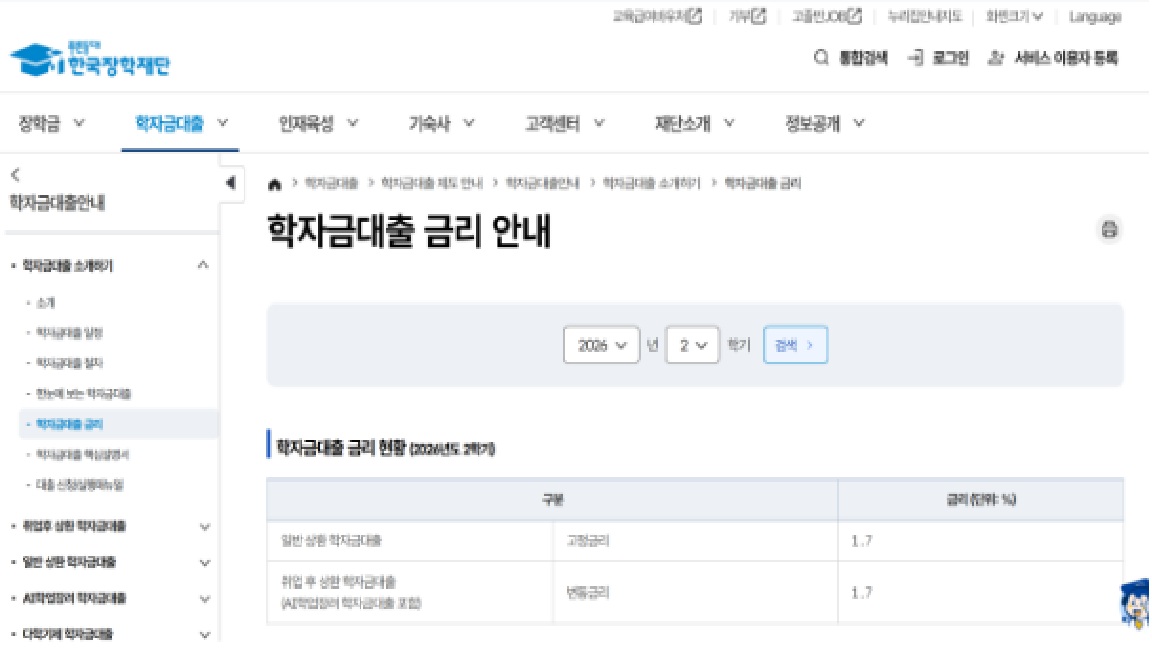
Kicker: COVER STORY Drowning in Financial Leverage: The Hidden Risks Behind Student Loan Investments By Eun-jin Kim, Cub-Reporter eunxvn@naver.com On many Korean campuses, a new financial habit is spreading quietly among students. Instead of using student loans only for tuition or living costs, an increasing number of young people are borrowing money from the Korea Student Aid Foundation, commonly called KOSAF, and putting it into stocks or cryptocurrency. This trend, informally called “loan investing,” is growing because KOSAF loans are far easier to access than bank loans. The fixed interest rate is low and borrowers do not have to start repaying until they find a job and earn enough money. For cash-strapped students who want to enter the booming stock market, this loan can feel like free capital rather than a serious debt. However, financial experts warn that this comfortable structure hides a dangerous trap. When markets fall, students who borrowed to invest can lose both their principal and their ability to repay, turning what was meant to help them study into a heavy financial burden that follows them into adulthood. Why Student Loans Look Like Easy Money Image of the Korea Student Aid Foundation (KOSAF) website showing its 2026 second-semester loan interest rate table The appeal of KOSAF loans comes directly from their structure. Unlike commercial bank loans, KOSAF offers a fixed annual interest rate of only 1.7%, and students do not need a credit check or a co-signer to apply. Undergraduate students can also borrow up to 24 million won in total for living expenses during their entire degree, in addition to full tuition coverage. More importantly, the “employment-linked repayment” program allows students to delay repayment until their annual income exceeds about 30.37 million won. In practice, this means many students carry the loan for years without paying a single won toward the principal. For a generation watching stock indexes rise and hearing stories of friends who made quick profits, these conditions look like an opportunity rather than a burden. Because the loan is disbursed directly into a personal bank account, some students transfer part or all of it into a brokerage account soon after receiving it. Since there is no immediate repayment pressure, the psychological distance between “borrowed money” and “my money” quickly narrows, encouraging riskier investment decisions than students might otherwise make. When Leverage Turns Into a Debt Trap The consequences of this trend are already visible in official data. According to an analysis by a member of the National Assembly’s Political Affairs Committee, based on data from South Korea’s Financial Supervisory Service, the balance of margin loans* held by investors in their twenties surged from about 188.8 billion won in April 2025 to 423.9 billion won in April 2026, an increase of roughly 124.5%, or 2.24 times, in just one year. This was the sharpest increase among all age groups, well above the market-wide average growth rate. Margin loans allow investors to borrow money from securities firms to buy more stock than their own cash would allow, which means both potential gains and potential losses are magnified. The danger becomes clear when stock prices drop. If the value of an investor’s holdings falls below a certain level, brokerage firms automatically sell the shares to recover their loan, a process called a forced liquidation. For young investors with little income and no financial cushion, a single forced liquidation can wipe out savings and leave them owing money they cannot repay. This risk is not only theoretical. Financial Supervisory Service data show that people in their twenties registered as credit delinquents reached 65,887 by July 2025, a 25.3% increase from 52,580 at the end of 2021, with unpaid stock and cryptocurrency investments cited as a major cause. Mobile Apps Make the Risk Feel Smaller Part of the problem lies in how easy investing has become. Mobile trading apps, or MTS, now let anyone buy or sell stocks within seconds using a smartphone. Many securities firms have added game-like features to these apps, such as badges for “top 1% returns,” push alerts for every price movement, and screens showing how much a stock has risen since a user sold it. Experts say these features are designed to keep users opening the app, but they also make investing feel more like a game than a financial decision, weakening users’ sense of risk. In response, financial authorities and student support agencies have started strengthening protective measures. Since 2022, KOSAF and the Credit Counseling and Recovery Service have allowed students struggling with loan payments to apply for combined debt adjustment, which can reduce the principal by up to 30% and extend repayment periods up to 20 years. Lawmakers have also called for stricter monitoring of brokerage firms and expanded financial education for young borrowers, warning that reckless loan investing could become a wider social risk rather than just a personal one. These cases show that a student loan is not simply free money; it is borrowed money that must eventually be repaid, and it can grow far heavier if it is used for speculation rather than for its original purpose. Learning to manage money responsibly, understanding investment risk, and building steady saving habits are skills every young adult needs long before they earn a full salary. A single semester of easy credit should never outweigh years of financial stability, yet that is exactly the trade many students are unknowingly making when they treat a student loan as investment capital. In the end, university students should remember why KOSAF loans exist in the first place: to support education and basic living costs, not to fund short-term bets on the market. Only by using borrowed money for its intended purpose and building healthy financial habits early can young people achieve real, lasting economic independence instead of starting adulthood already trapped in debt. Sources: Polinews, “[Issue] Margin loan balance nears 35 trillion won as loans among people in their 20s surge,” Apr. 29, 2026. (www.polinews.co.kr) Smart FN, “Credit delinquents in their 20s driven by ‘loan investing’ top 60,000,” Dec. 15, 2025. (www.smartfn.co.kr) eToday, “Turning investment into a game: the ‘risky design’ of brokerage MTS apps,” May 20, 2026. (www.etoday.co.kr) Korea Student Aid Foundation (KOSAF), 2026 second-semester student loan guidelines, via Seoul National University notice. (ie.snu.ac.kr) Financial Services Commission, press release on the KOSAF–Credit Counseling and Recovery Service debt adjustment agreement. (fsc.go.kr) Korea Student Aid Foundation (KOSAF), www.kosaf.go.kr
DEBATE
Beyond the Shortcut: Navigating the Ethical Use of Generative AI in Academic Tasks
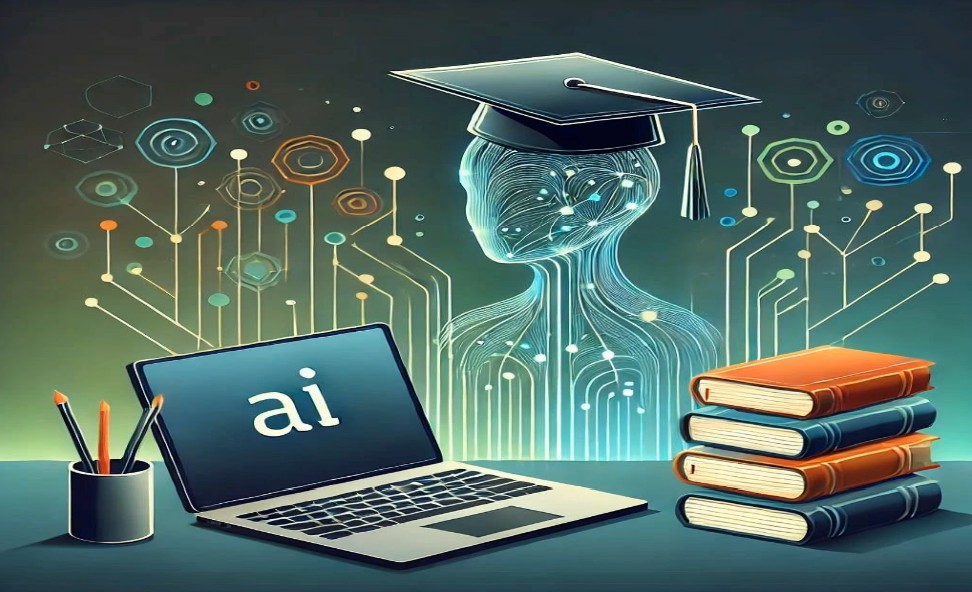
Kicker: DEBATE Beyond the Shortcut: Navigating the Ethical Use of Generative AI in Academic Tasks By Seung-su Kim, Cub-Reporter seungthlng14@gmail.com Generative Artificial Intelligence As generative artificial intelligence tools like ChatGPT become deeply embedded in everyday academic routines, university students find themselves navigating an unprecedented technological shift. What began as a novelty has rapidly evolved into a primary assistant for drafting, brainstorming, and structuring assignments across campus. While these powerful tools offer remarkable efficiency and lower the barrier to complex problem-solving, they simultaneously spark critical conversations regarding academic integrity and the true meaning of independent learning. Rather than viewing AI as a shortcut that bypasses intellectual effort, the campus community now faces the urgent task of redefining these technologies as collaborative partners. Establishing clear guidelines and ethical frameworks is no longer optional; it is essential to ensure that technological advancement enhances—rather than diminishes—the core value of higher education. Redefining AI as a Learning Partner, Not a Substitute As artificial intelligence permeates higher education, students are increasingly utilizing these tools to streamline their academic workflows, ranging from organizing dense lecture notes and translating scholarly articles to outlining comprehensive research papers. However, academic departments and faculty members emphasize that the true pedagogical value of AI lies in its capacity to serve as a supportive co-pilot rather than an automated replacement for critical thinking. Instead of relying blindly on algorithmic text generation to complete assignments wholesale, responsible learners are discovering how to harness AI for diagnostic feedback, structural critique, and conceptual brainstorming. This balanced approach allows students to leverage technological efficiency while ensuring that their own analytical skills, unique voices, and intellectual insights remain at the center of their academic development. Furthermore, educational specialists argue that treating AI as an interactive tutor rather than an answer machine fosters a deeper engagement with the subject matter, teaching students how to prompt, evaluate, and refine information critically. Practical Guidelines and Institutional Frameworks To prevent the misuse of technology and maintain uncompromised academic fairness, universities are moving decisively toward establishing transparent, adaptable guidelines regarding AI integration in coursework. Rather than implementing sweeping, prohibitive bans that often prove ineffective in a rapidly evolving digital landscape, forward-thinking academic institutions are encouraging professors to explicitly outline acceptable parameters for AI assistance within their individual course syllabi. These modern institutional frameworks typically distinguish between acceptable developmental uses—such as preliminary literature searches, syntax polishing, and formatting assistance—and prohibited actions, such as the unauthorized generation of core argumentative content or uncredited text substitution. By providing these precise boundaries, the university aims to guide students toward ethical compliance while equipping them with the robust digital literacy required in contemporary professional environments, where AI proficiency is increasingly expected. Fostering a Culture of Academic Integrity Ultimately, the integration of generative AI into campus life serves as a profound test of self-regulation, moral judgment, and academic ethics among university students. While technology will undoubtedly continue to advance and reshape the global educational landscape at a breathtaking pace, the foundational pillars of honesty, originality, and intellectual integrity remain steadfast. Navigating this complex digital era successfully requires a collective, ongoing commitment from both the student body and the faculty to uphold rigorous standards of evaluation and mutual trust. As the campus community continuously adapts to these innovative tools, fostering a deeply ingrained culture of mindful, transparent, and responsible AI usage will ensure that future graduates emerge as professionals who are both technologically sophisticated and ethically grounded. Sources: https://www.chosun.com/economy/weeklybiz/2026/08/30/54AVCWWJ35C63DOFTHQCIJJOXQ/ https://news.kbs.co.kr/news/view.do?ncd=8636634 https://www.newspim.com/news/view/20260828000816
참여: 0
EDITORIAL
In Our Own Way
Kicker: Editorial In Our Own Way By Sol-Mi Lim, Editor-in-chief imsolver4@gmail.com University life often seems to come with an invisible set of expectations. Some students spend their days studying, preparing for internships, earning certificates, and thinking seriously about their careers. Others want to travel, meet new people, enjoy their freedom, and make as many memories as possible. When these different lifestyles meet, it is easy to wonder which one is the “better” way to spend our university years. However, perhaps there is no correct answer at all. Someone may feel happiest while working toward a clear goal, while another person may find meaning in experiences that have nothing to do with a résumé. Studying hard does not guarantee success, just as spending more time enjoying the present does not mean someone is wasting their future. Our lives are far too unpredictable to decide their value only by how productive or ambitious we appear today. What matters more may be whether we are making choices that genuinely belong to us. There is little meaning in studying endlessly simply because everyone else is doing so. In the same way, forcing ourselves to enjoy every moment because university is supposedly “the best time of our lives” can become another kind of pressure. Especially during university, people seem to take very different paths. Some want to experience as much as possible, while others choose to prepare carefully for what comes next. Neither choice makes one person more successful, mature, or fulfilled than the other. We do not yet know who will look back on these years with the greatest satisfaction. Perhaps that is exactly why we should stop searching for one perfect way to live. There is no single answer to life, and our future is not decided by one period or one choice. For now, it may be enough to listen to ourselves and spend these years in the way that feels most meaningful to us.
SM NEWS
Most Popular
THIS ISSUE
AI Slop: The Rise of Low-Quality AI-Generated Content
The Myth of Labor Income: Why Today’s Youth are Turning to High-Risk Investments
The Seamless Wallet: How Offline Easy Payment Services Reshape Campus Consumption
A Helping Hand for Young Job Seekers
FANOMENON: When Fandom Becomes a K-Culture Platform
Grammy’s New Asian Pop Category: A Step Toward Diversity or a New Divide?
The Record-Breaking Heatwave of 2026: Causes, Impacts, and How to Stay Safe
One Test, Many Institutions: A New Era of Public Sector Recruitment
Reclaiming Our Focus: The Rising Trend of Digital Detox on Campus
Beyond Coffee: Low-Cost Coffee Chains Transform into Full-Course Dining Hubs
Beer Surpasses Wine in France, the “Land of Wine”
Weather on Demand? The Promise and Risks of China’s Artificial Rain
이 사이트는 자바스크립트를 지원하지 않으면 정상적으로 보이지 않을수 있습니다.